
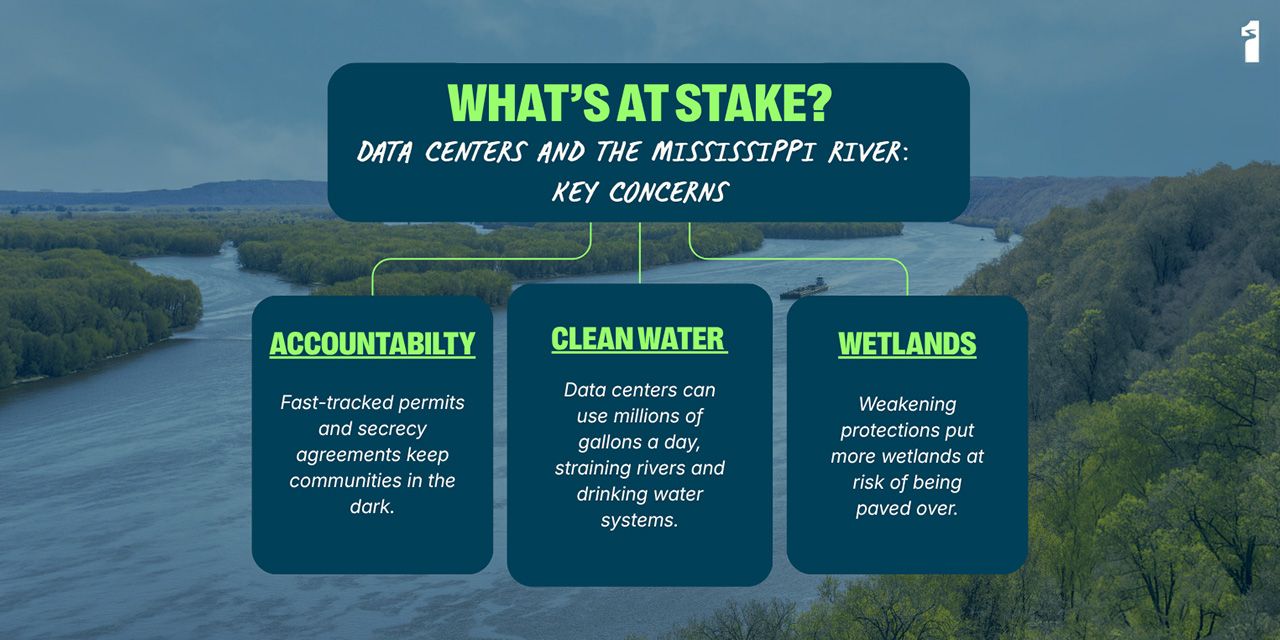
New data centers are popping up across the Mississippi River Valley faster than communities can keep track of them. These massive facilities use huge amounts of power and water, and they’re raising real concerns among people who care about the River. But what does this mean specifically for the Mississippi?
Communities Are Being Left Out
Many data centers are being built with little to no public input. Fast-tracked permits, permit exemptions, and non-disclosure agreements (NDAs) often keep local officials and residents in the dark, sometimes with public comment windows as short as seven days. That means that communities lose their chance to weigh in on a project that will shape their water, power, and land for decades.
Data center NDAs go further than most business agreements, too. They can keep energy and water usage secret, along with who’s actually funding the project. This matters most in places that already face barriers to participating in public decisions. Nearly every county along the Mississippi River has census tracts considered disadvantaged, often due to high poverty rates, low levels of education, and large populations of sensitive individuals (people who are non-white, children, and/or elderly).
These populations face unique challenges that can hamper their ability to comment on permitting. Issues range from a lack of internet access to the demands of work and caregiving. When comment periods are short, and information is hard to find, these communities are the ones most likely to be left out of the conversation.
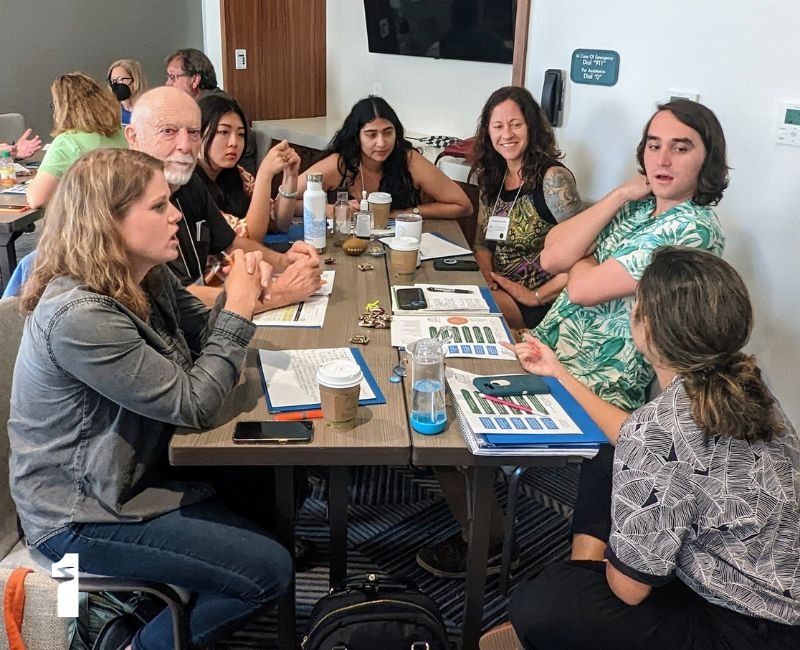
A few resource hubs are working to close that gap. The National Association for the Advancement of Colored People’s (NAACP) guide for frontline communities lays out how communities can push for real engagement, accountability, and lasting investment. Environmental advocate Erin Brockovich also runs an interactive tracking map where communities can report data center proposals as they learn about them.
The River Doesn’t Have Water to Spare
Unlike the arid Southwest, the Mississippi River Valley is considered a “water-rich” region. But some areas are running out of water, and there are few, if any, regulations to stop overuse. Plus, large data centers, especially those built for A.I. learning, use water on a different scale than almost any other industry. The largest facilities can use up to 5 million gallons a day, as much as a town of 30,000 to 50,000 people. And, unlike other thirsty industries like irrigation, the water used by data centers has to be clean to prevent corrosion. This puts direct pressure on the same treatment systems and budgets that serve everyday families.
That pressure shows up differently across the River’s length.
In the Mississippi River Delta, which includes parts of Arkansas, Mississippi, and Louisiana, the Lower Mississippi River Alluvial Aquifer is already being drained faster than it can recharge. Additionally, decades of dredging on the Mississippi River and subsidence in Coastal Louisiana have dropped the Riverbed below sea level as far upriver as Natchez, Mississippi. During drought years, the River’s flow can’t push downstream hard enough, so saltwater creeps upstream past New Orleans, threatening drinking water intakes.
Upstream in the Midwest, Iowa’s Raccoon and Des Moines rivers supply drinking water to 600,000 people in the Des Moines metro. The rivers are already plagued with high nitrate levels from agricultural pollution. Low water levels concentrate the nitrate, making it even harder to treat the water.
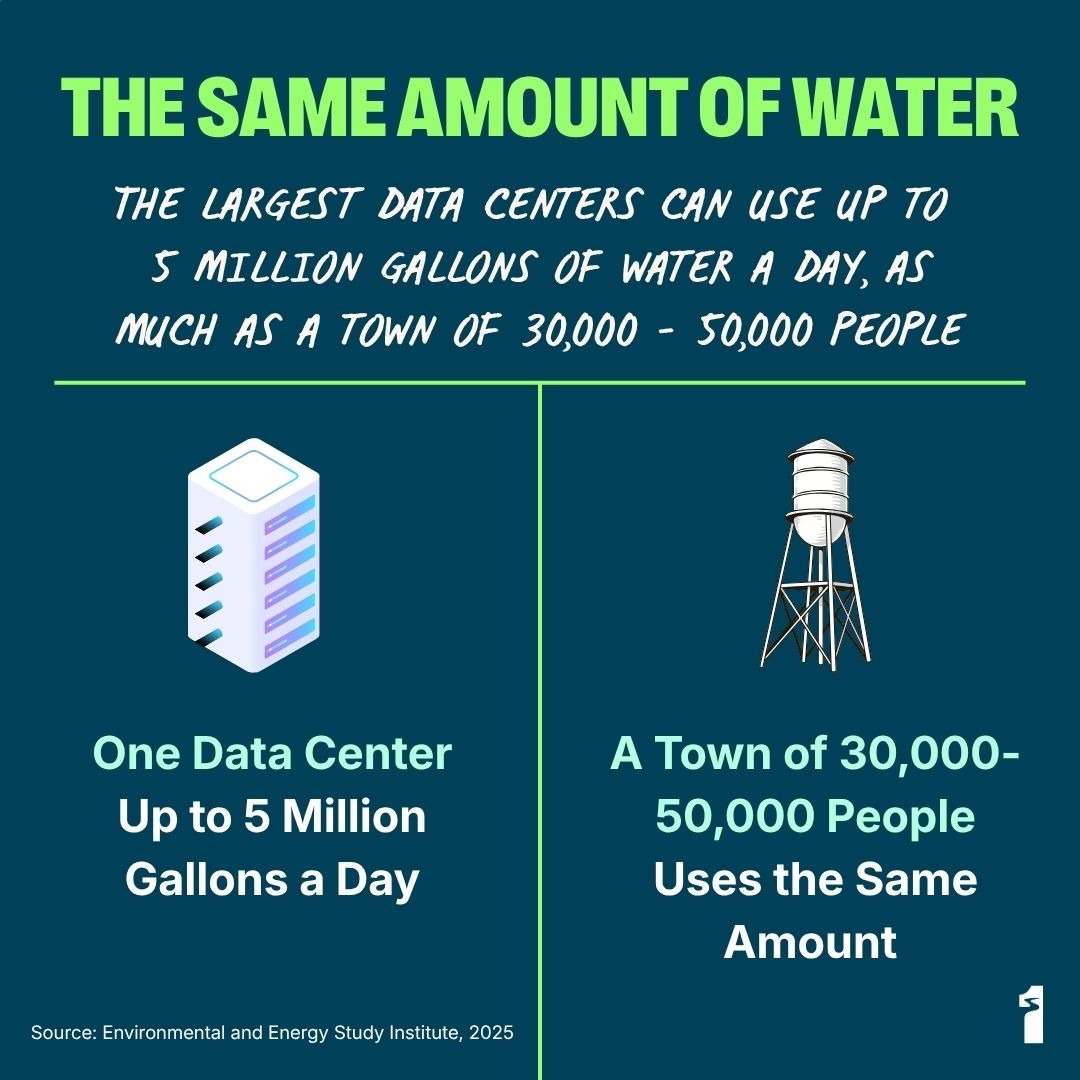
One data center alone won’t drain the River. But as more and more get built, those daily withdrawals add up, especially for a River that already supports drinking water, farming, wildlife, and shipping.
There’s no easy fix here, either. Data centers that use water for cooling pull the most, especially “evaporative cooling” systems, which lose huge amounts of water straight into the air. Air-cooled systems skip that water use, but they need much more energy to run, and if that energy comes from fossil fuels, the water footprint just shows up somewhere else, plus the added climate impact.
One fix gaining traction: requiring data centers to run “closed-loop”, meaning they treat and reuse the same water throughout their operating life instead of losing it to evaporation. Mississippi River Network member, Prairie Rivers Network, is pushing for a bill in Illinois that would require closed-loop cooling and renewable power for data centers.
Wetlands Are Losing Ground
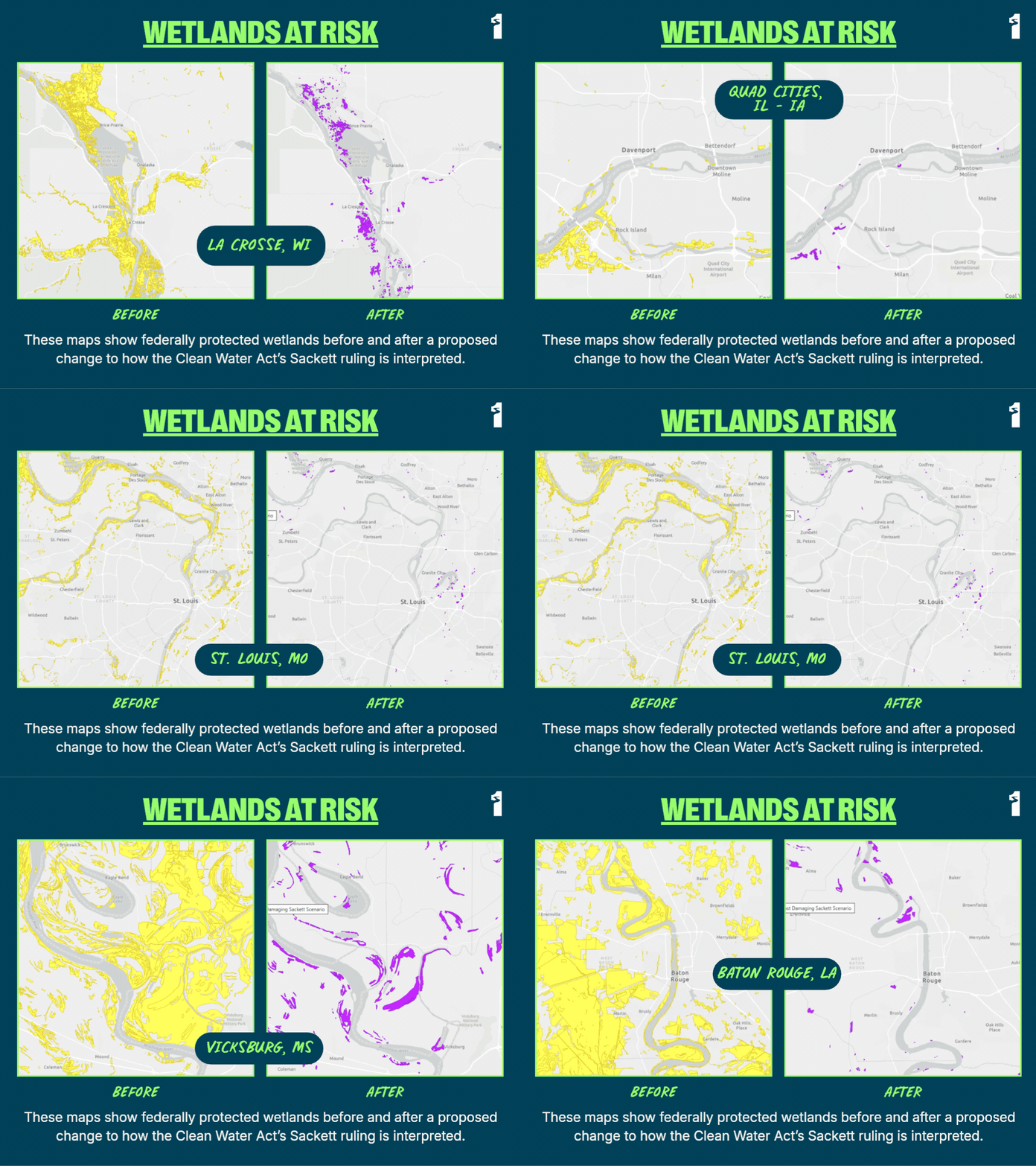
Wetlands filter our water, buffer floods, and give fish and wildlife a place to live. They’re also disappearing quietly, acre by acre, often without most residents ever noticing until the trees are already gone.
Most River cities are surrounded by wetlands, and in most states, federal wetlands protection is the only thing standing between those sensitive natural areas and development. In recent years, those protections have been drastically rolled back, and the current Administration is aiming to roll them back further.
Some states and local municipalities have more robust protections for wetlands. However, proposed changes to the Clean Water Act could override those too, leaving communities with even fewer tools to push back.
These data center sites are not small. Near Birmingham, AL, a proposed data center would clear at least 100 acres of a 700-acre woodland for 18 buildings, each larger than an average Walmart Supercenter. That’s not just trees. Its habitat, flood buffer, and water filtration disappearing under concrete and generators. In Memphis, the Colossus data center already covers about 785,000 square feet, roughly the size of three Walmart Supercenters, and its developer plans two more facilities nearby.
What You Can Do
Local governments still hold real power here. City councils can limit development through zoning, even where federal and state wetland protections fall short. The first step is making sure local leaders know what’s changing and why it matters for their community.
Stay close to the decisions happening where you live, and share what you learn. The more people paying attention, the harder it is for these projects to move forward unchecked.
Become a River Citizen
Data centers are moving fast, and so are the rules that govern them. Sign up as a River Citizen to stay in the loop on what’s happening along the Mighty Mississippi and get notified when there’s a chance to speak up.

Blog by Olivia Dorothy
One Mississippi