
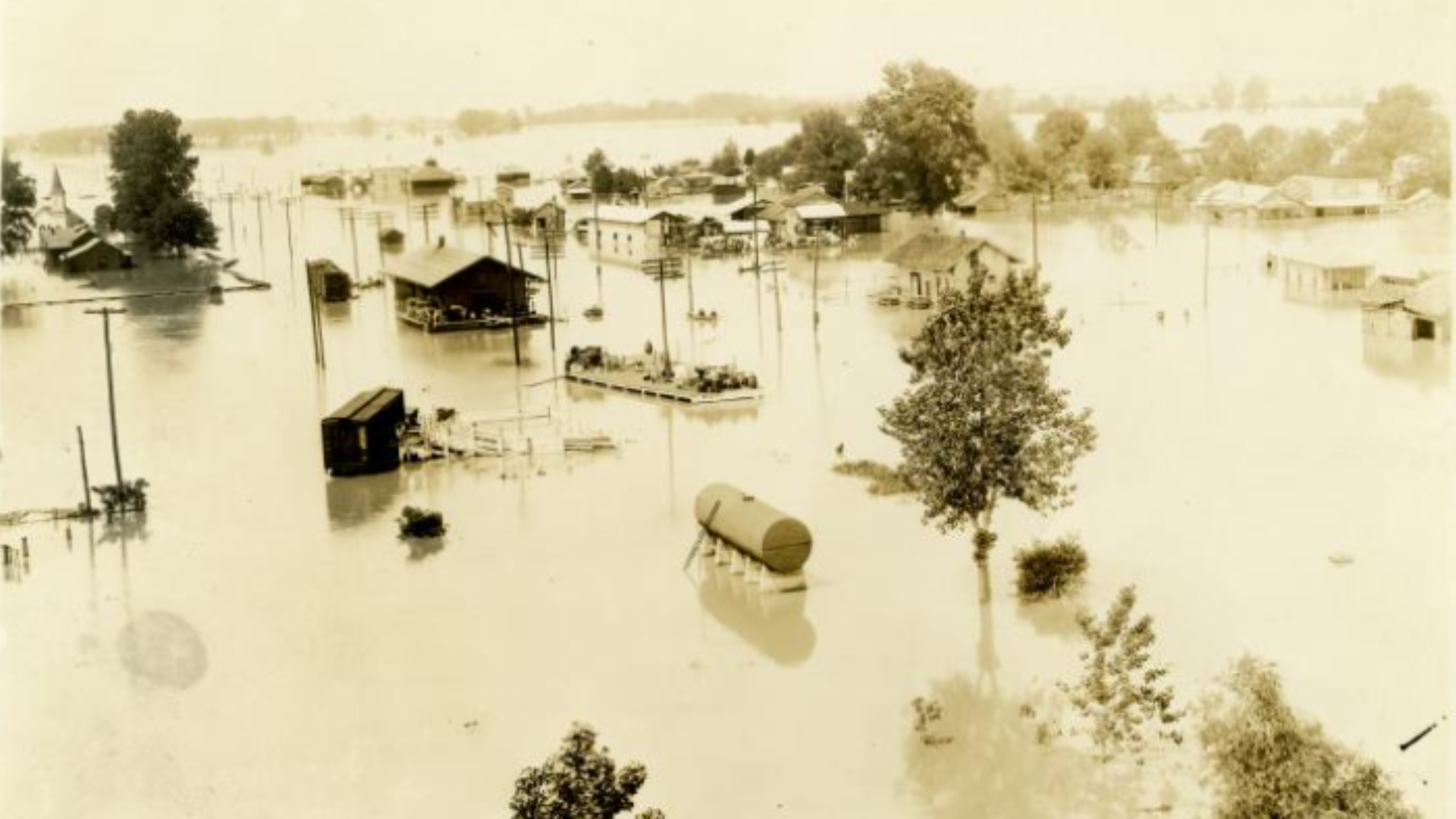
Long before modern levees, the Mississippi River flooded most springs. Its floodwaters spread across millions of acres of floodplain forest and wetlands, dropped fresh soil, filled backwaters with fish, and then pulled back. Down south, the River built its own delta by carrying sediment downstream for thousands of years, laying it down and building land. Flooding was not a malfunction. It was how the River worked, and how a lot of life along it was nourished.
Then settlers arrived who wanted something different from it.
The belief that took hold
As settlement pushed up and down the valley, the River’s seasonal habit of flooding became a problem to solve. The floodplain was rich land, and rich land meant cotton and money for those who owned it, built on the labor of those who worked it. Wetlands were drained, forests were cleared, and levees went up to keep the water in one reliable channel - not sprawling across the landscape.
Underneath it all was a belief: that with enough engineering, people could manage the Mississippi and bend its natural rhythms to their needs.
Engineers argued over how. One camp wanted levees to confine the River. Another wanted outlets to give the water somewhere to go. The U.S. Army Corps of Engineers adopted a levees-only approach, and warnings against it were set aside.
A squeezed River rises
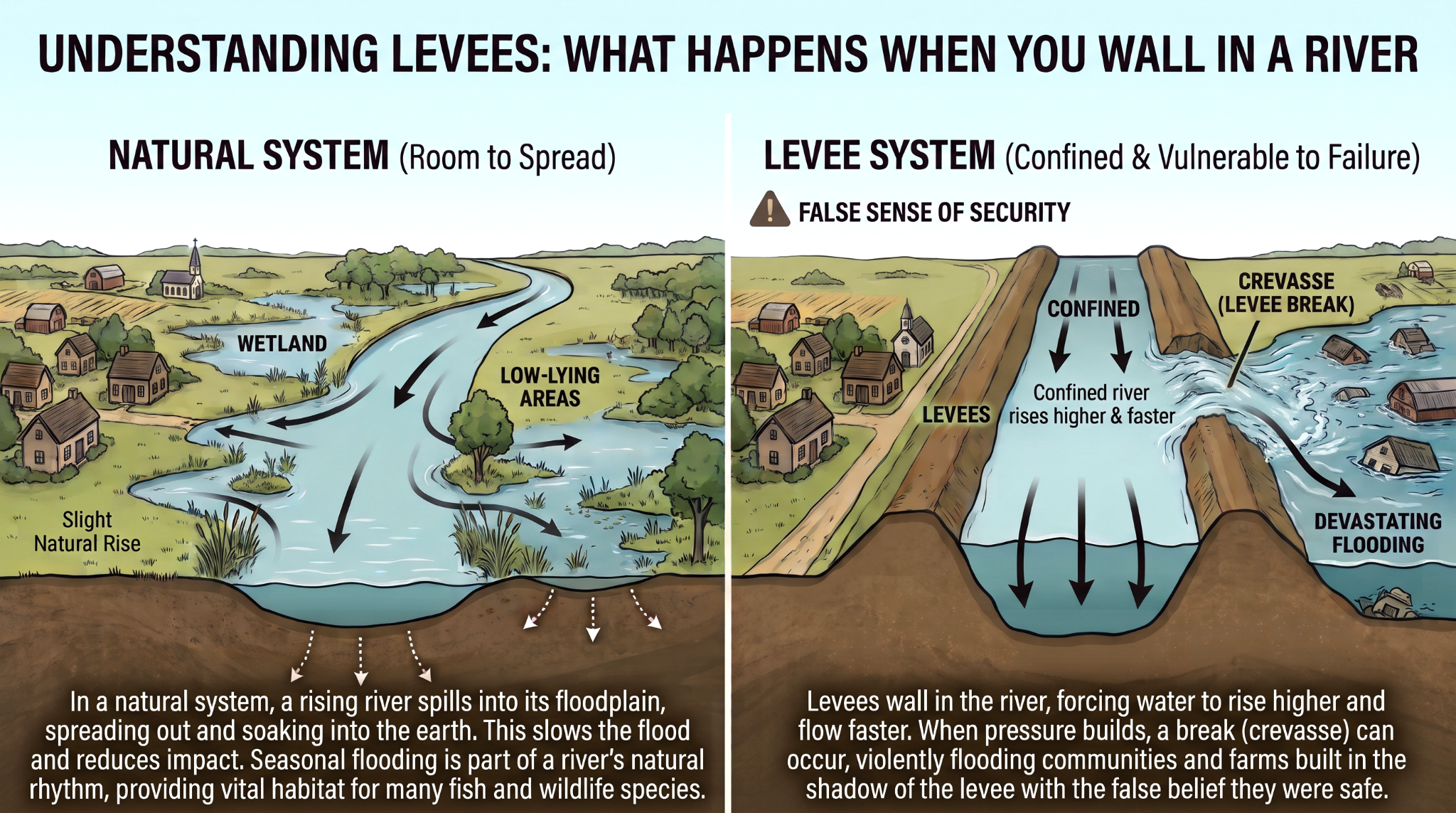
Here is the problem with walling in a river: the water has to go somewhere. Levees cut the Mississippi off from the floodplain that once held its overflow. So floodwater that used to spread out was forced to stack up. A confined River rises higher and higher.
But each new levee made people feel safer. People built homes, farms, and towns behind them. The more they built, the more there was to lose, and the more pressure there was to build the levees higher.
Engineer Charles Ellet saw it coming. In an 1852 report, 75 years before the Great Mississippi River Flood of 1927, he called the levees-only idea “a delusive hope” that “encourages a false security.” The warning went unheeded.
1927
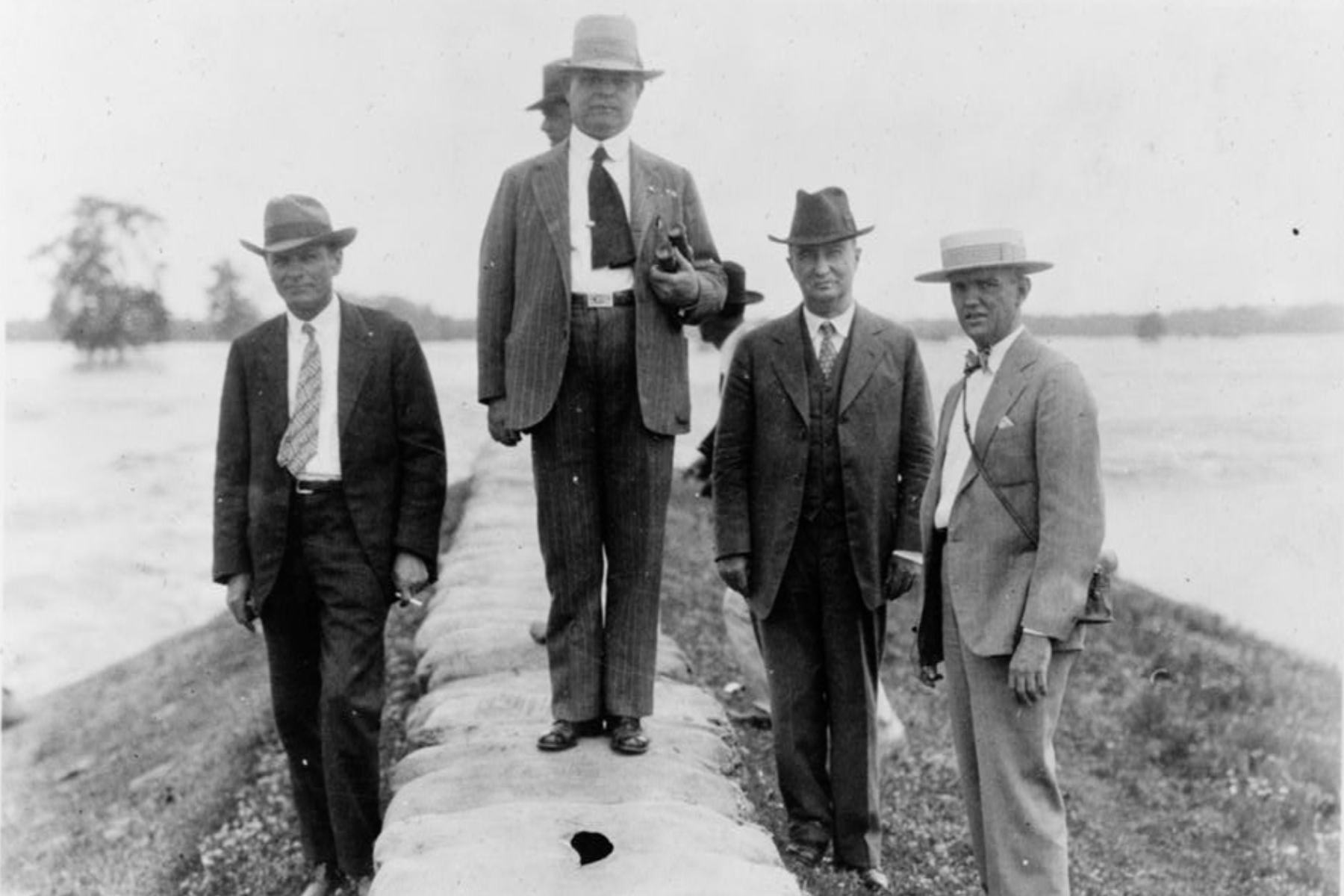
In the spring of 1927, after months of heavy rain that began in August 1926, the River rose against levees that had been built ever taller. Then they failed, up and down the valley and along its tributary streams. Levee breaks like this are called crevasses, gaps that let the River pour out onto the land. As John Barry writes in Rising Tide, the break at Mounds Landing, Mississippi, on April 21 was “the greatest single crevasse ever to occur anywhere on the Mississippi River.” It flooded an area roughly 50 miles wide and 100 miles long, with water up to 20 feet deep.
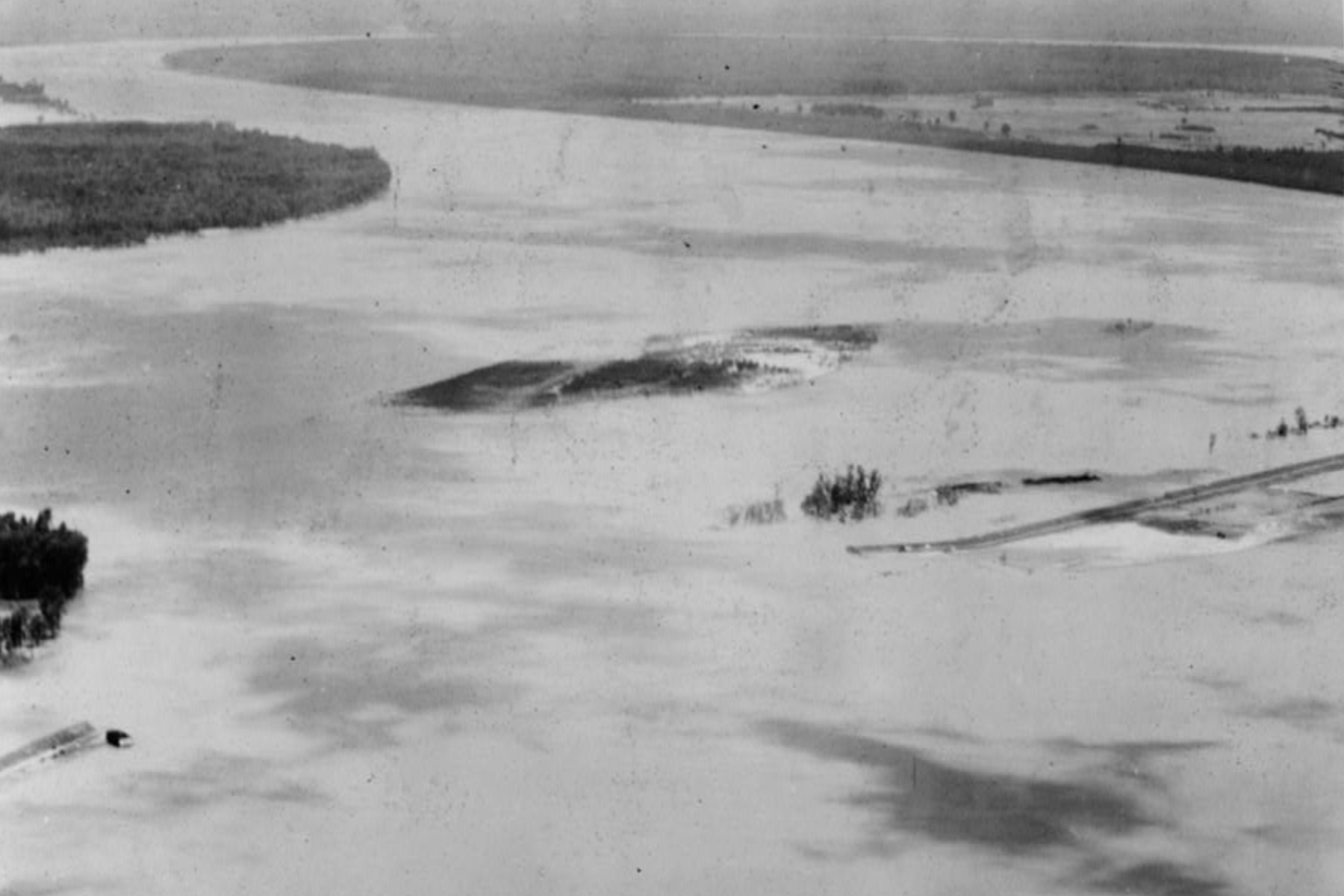
Entire communities went underwater. In all, about 27,000 square miles were inundated. Some 700,000 people were displaced from their homes, mostly in Arkansas, Mississippi, and Louisiana. Official death counts ran into the hundreds, and Barry writes that the true toll almost certainly ran far higher. The flood hit Black Americans hardest. In the Mississippi Delta, much of the farm labor was done by Black sharecroppers and tenant farmers, and more than 200,000 Black Americans were steered into relief camps.
With all the rain, a flooded Mississippi was expected. What turned it into the most destructive river flood in U.S. history was generations of decisions that squeezed the River between levees, built towns and farms behind them, and told people they were safe.
Why start here
A hundred years later, it is tempting to remember 1927 as a freak event, a once-in-a-lifetime flood that came and went. The rain was extraordinary, but the disaster was not a fluke. It was the predictable result of an idea about how to treat a living River, and that idea shaped the River we live with now.
The alternative isn’t new, either. Engineers argued for giving the water somewhere to go long before 1927, and nature-based solutions, like restored wetlands and reconnected floodplains, are its modern form. If that’s new to you, our primer on nature-based solutions is a good place to start.
To speak honestly about what the next hundred years of River management and care could look like, we have to start with how we got here. The River did not fail in 1927. The belief that we could control it did.
This is the first post in our series marking 100 years since the Great Mississippi River Flood of 1927. In the months ahead, we’ll keep looking at what happened, who it affected, and what the next century of River management and care could look like.
River Citizens receive each new post first, along with ways to take part in the centennial and care for the River. Become a River Citizen.
