

Picture a heavy rain over a town. Water pours off roofs, streets, parking lots, and rushes into storm drains, all heading to the same place at the same time.
Now picture that same rain landing on a natural area with plants that help settle the water, such as a rain garden, wetland, or marsh. The water lands in these areas and slows down, soaks in, and even gets cleaner when filtered by the plants.
That difference is what nature-based solutions are about:
working with natural systems so people, land, water, and wildlife all do better.
It matters because the Mississippi River collects runoff from towns and farms across its massive watershed, covering 3.2 million square miles. That same River provides drinking water for over 20 million people and habitat for countless fish, birds, and other wildlife. Nature-based solutions are multi-benefit. The same wetland that cleans water can also hold floodwater, ease drought, and provide wildlife habitat, all at once.
Nature-based solutions, in plain language
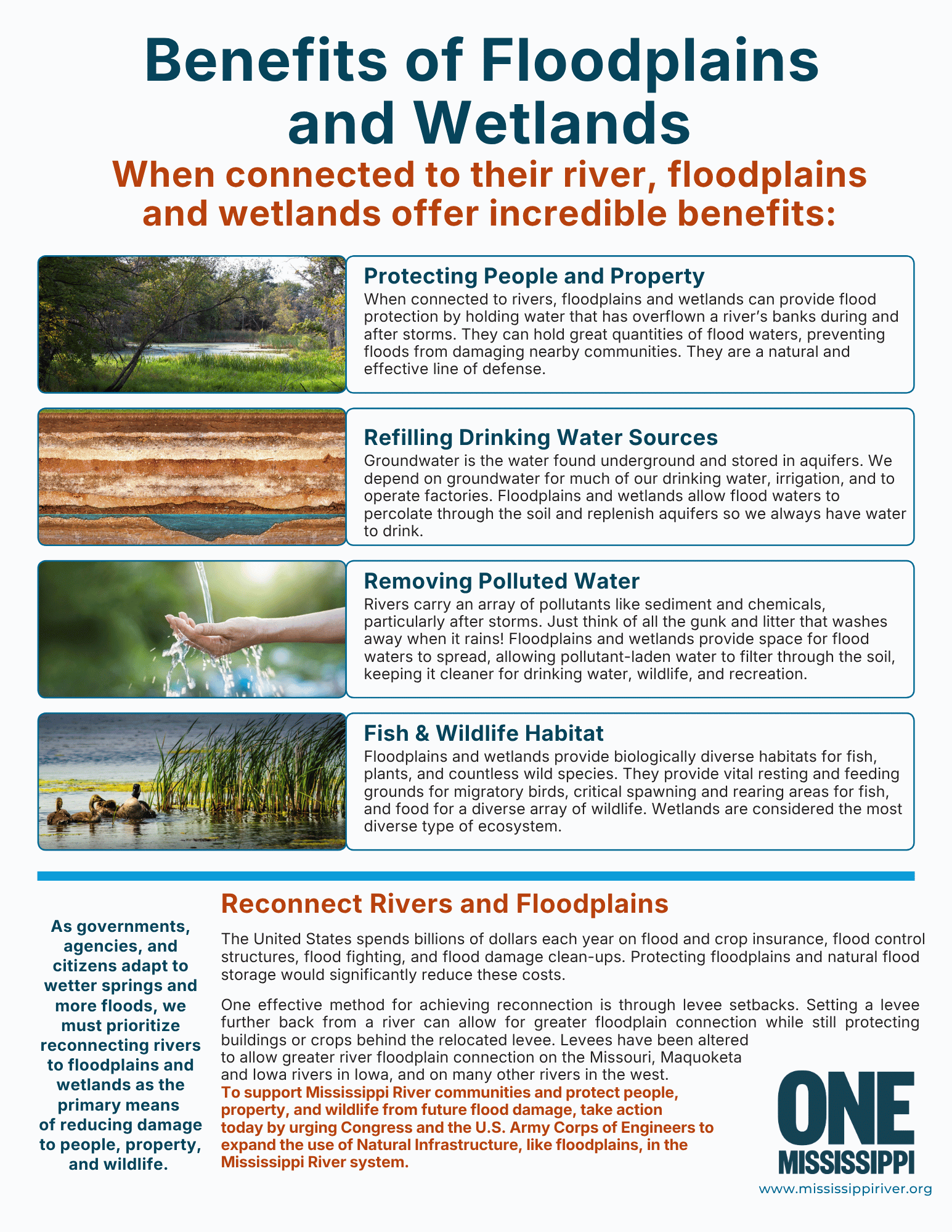
Nature-based solutions are ways of working with natural systems, like wetlands, soil, and plants, to solve problems people face, like flooding, polluted water, and drought.
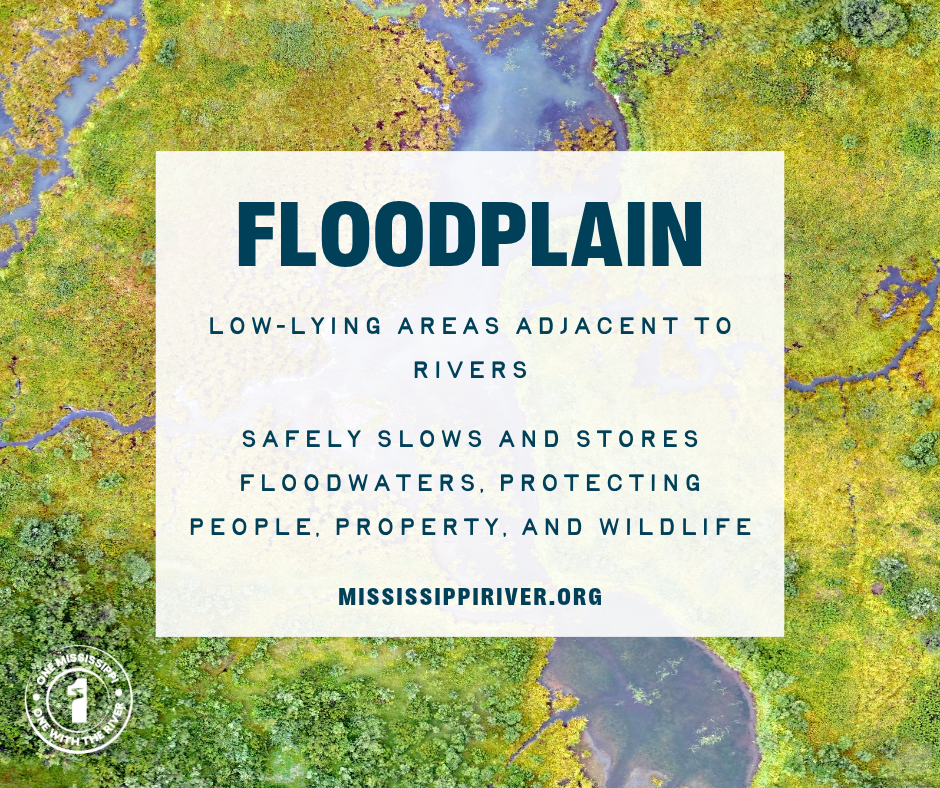
The idea isn’t new. Healthy rivers have always had wetlands and floodplains, the low land beside a river that fills with water when the river floods. These places hold water, filter it, and provide habitat for fish, birds, and other wildlife. Nature-based solutions learn from how those natural processes keep ecosystems balanced and healthy, and apply the lessons to how we plan, build, and manage land and water.
What it looks like where you live
Nature-based solutions come in every size. Some are as small as a backyard garden while others stretch for miles.
In a yard, schoolyard, or church lawn, it might be a rain garden or native plants that soak up runoff, or a rain barrel that catches water off a roof.
In a city or town, it could be trees, planted ditches (bioswales), or special paving that lets water soak through. It could be a park built to flood now and then and drain slowly, a vacant lot that holds stormwater, or a creek brought out of a pipe and back into an open channel.
On a farm, it might be cover crops and less tilling that keep soil and water in place, planted buffers along streams, or prairie strips of native plants in and around crop fields that filter runoff containing pollutants like excess fertilizer and pesticides before it reaches the water. It could also be wetlands restored in field corners and low spots.
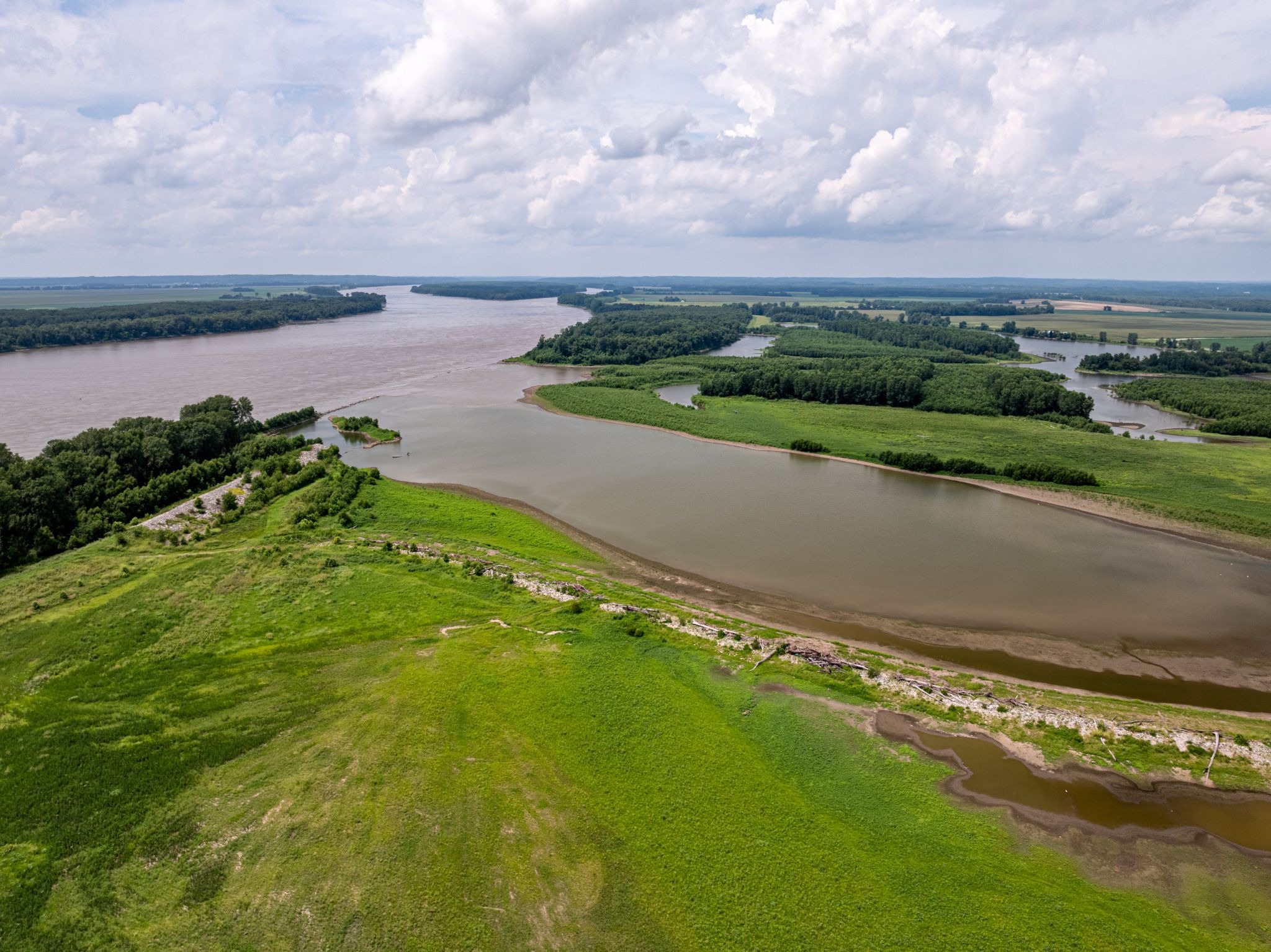
Along the River and its tributaries, it could be a wetland or marsh that was restored or protected, a floodplain forest left intact, or a levee moved back to give the River room.
Mississippi River Nature-Based Solutions Projects
Nature-based solutions are already at work from the top of the Mississippi River to the bottom. Here are a few examples:
- Upper River, Dubuque, Iowa: The Bee Branch Creek Restoration replaced almost a mile of storm sewer with a creek and floodplain that resembles the one that ran through the area about 100 years ago. Bringing the buried creek back to the surface gives flash floodwater a safe path through the neighborhood. Learn more
- Middle River, Dogtooth Bend, Illinois: The Len Small Levee breached repeatedly after it was built in the 1940s, damaging farms, roads, and homes. Federal, state, and local agencies and The Nature Conservancy are now working together on a non-structural approach that includes floodplain restoration and studying the results for people, wildlife, and the River so others can learn from it. Learn more
- Lower River, New Orleans, Louisiana: After Hurricane Katrina, the city began looking for ways to live with water instead of only diverting it. The Mirabeau Water Garden, now under construction in the Gentilly neighborhood, will turn a 25-acre site into a park designed to hold up to 10 million gallons of stormwater. Learn more
Each of these projects looks different, but all three work with natural processes to give water somewhere to go. Projects like these can also protect communities, provide habitat for wildlife, and clean water along the way.
Let’s Review: One Solution, Many Benefits
A well-placed wetland, rain garden, or restored floodplain can do many jobs at once:
✔ Cleaner water
✔ Habitat for wildlife and greater biodiversity
✔ Less flood and drought risk
✔ Stronger, safer communities
At One Mississippi, we believe nature-based solutions should be a first consideration in the future of River management. Levees and other concrete, or ‘gray infrastructure,’ should be used where they’re still needed and paired with natural solutions as part of longer-term plans.
When people see how these projects and places connect to their own lives, they care for them, champion them, and ask for more. That’s why we want to hear about the places you know.
Tell us about a place
Do you know of a wetland, rain garden, restored creek, prairie strip, or other project that’s working with nature in your community? Or a place that could use one? A short description is plenty, and photos are welcome.
We’re focusing on the 10 states along the Mississippi River, from Minnesota to Louisiana, but we want to hear about examples from anywhere in the watershed, across the country, and beyond. A good model somewhere else can teach us all something.
We’ll use these stories to highlight impactful nature-based solutions and make the case for more of them. We may not be able to feature every place, but we’d like to hear about all of them and to stay in touch with you and the people who care about them.
Share a place: [form link]
Become a River Citizen
Want to see more nature-based solutions on the River? Become a River Citizen for updates and ways to help bring more of these solutions to your community.
