
Today, nearly the entire Mississippi River and its floodplain are considered degraded or impaired.
More than 90% of the River’s historic floodplain has been lost behind levees, the channel has been engineered from the Twin Cities to the Gulf of Mexico to support river commerce, and even in the River’s headwaters—often described as “free-flowing”—pollution from industrial agriculture and mercury contamination limit ecosystem health and fish consumption.
Yet across this enormous landscape, one program has steadily worked on monitoring and rehabilitating habitat.
The Upper Mississippi River Restoration (UMRR) Program, created in 1986, is the first—and still one of the only—large-scale restoration efforts of its kind on a major working river. Housed within the U.S. Army Corps of Engineers, and supported by partners across five states and multiple federal agencies, UMRR rehabilitates degraded habitat, studies long-term ecological trends, and brings people and agencies together to plan the River’s future.
Why UMRR Matters
The Upper Mississippi River stretches through a highly engineered system of locks and dams, which have turned long sections into a series of pools—large, slow-moving reservoirs. These changes made industrial navigation possible, but they also cut off floodplain forests, eliminated side channels, and altered natural flows.
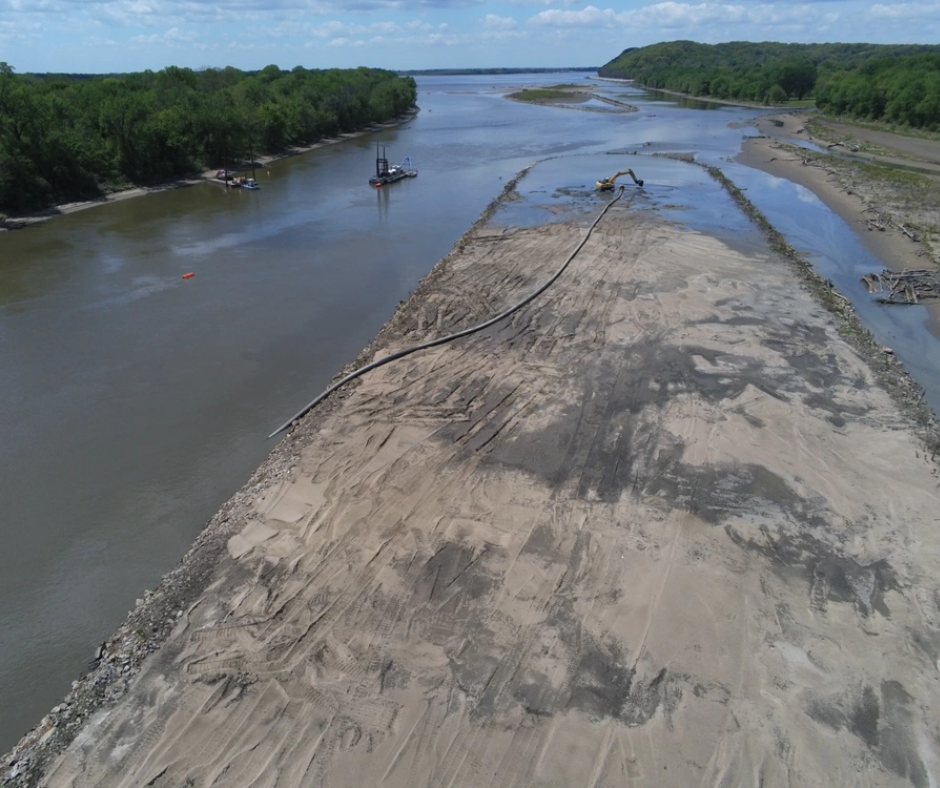
UMRR was designed to counteract that degradation, even within a modified system. Its habitat projects rebuild islands, deepen backwaters, reconnect side channels, restore wetlands, and create spaces where fish, birds, mussels, and other wildlife can survive.
Across the River’s 30 million acres of aquatic and floodplain habitat, this work may feel small. But without these projects, ecologists estimate that some rare or threatened species may have already disappeared from large portions of the Upper Mississippi River.
UMRR can’t restore the River to its pre-dam condition—but it is rebuilding pockets of habitat that sustain the River’s biodiversity.
What Does “Habitat Rehabilitation” Mean?
You’ll notice the program doesn’t use the word “restoration.” There’s a reason.
Restoration would mean returning the River to its historic, free-flowing condition—something that would require major actions like dam removal, which are not part of today’s navigation system or economy.
Instead, UMRR focuses on rehabilitation or enhancement: rebuilding lost or degraded habitat within the modified system. These projects recreate islands that washed away, deepen backwaters that filled with sediment, and reintroduce native plants to areas overwhelmed by invasive species.
But they aren’t self-sustaining. Once a backwater is dredged or an island is built, natural and human forces begin degrading it again. That’s why ongoing investment is essential.
So… What About Mitigation?
UMRR is not a mitigation program.
Mitigation is tied directly to the impacts of development—both new projects and the ongoing operation of older infrastructure. For example, if a levee or highway damages wetlands, the project must replace or offset what was lost.
But, much of the Mississippi River’s navigation system, including dams, channels, and harbors, was built before modern environmental laws and has never been fully mitigated, despite legal requirements to address ongoing impacts. Thus, ongoing impacts, such as sedimentation, altered flows, and habitat loss, persist today.
Programs like the UMRR are essential, but without meaningful investment in mitigation as well, they cannot fully reverse the River’s decline.
How One Mississippi Works With the UMRR Program
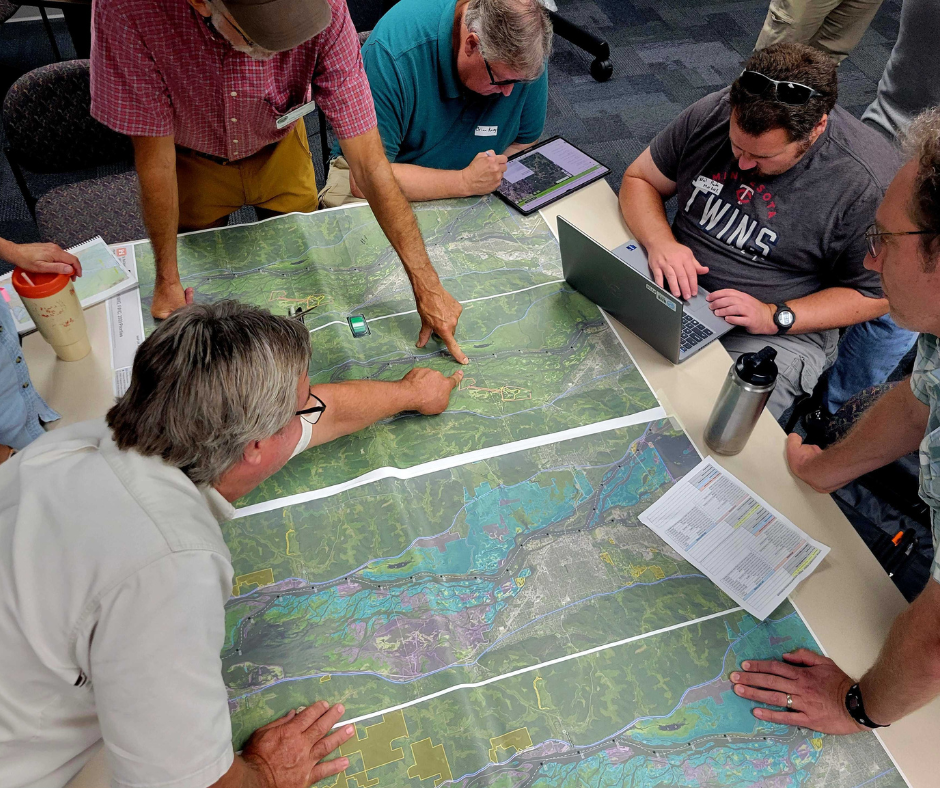
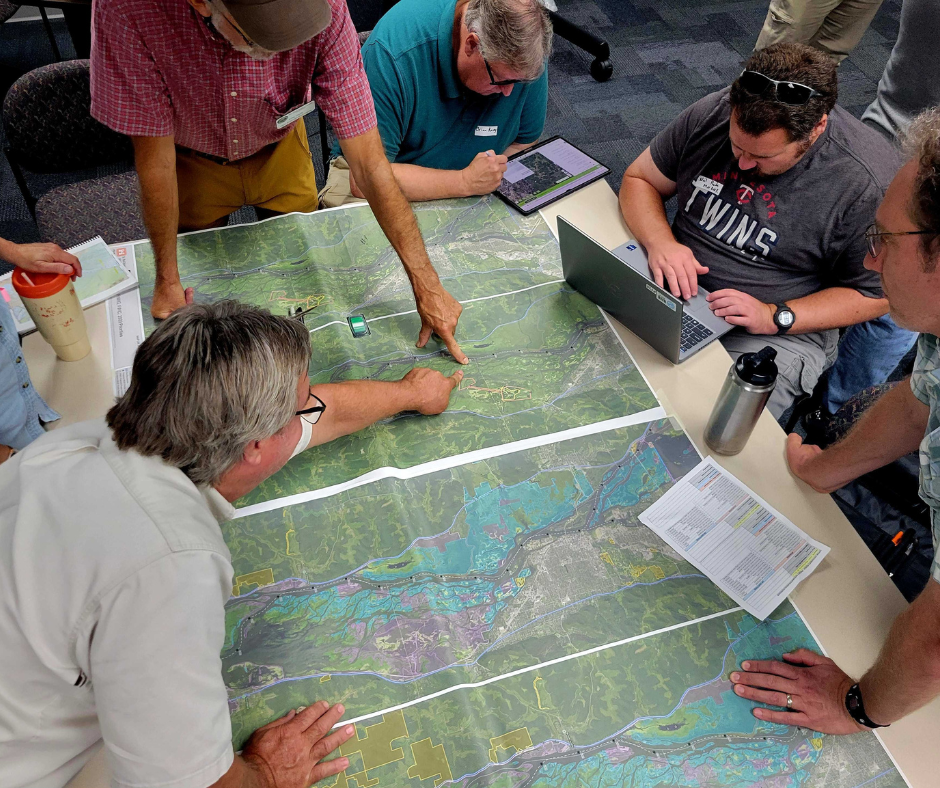
UMRR is built on collaboration. Project ideas don’t necessarily start in Washington—they begin in local planning teams within the U.S. Army Corps of Engineers’ Districts in St. Paul, Rock Island, and St. Louis. These teams include federal and state natural resource experts, and their meetings are open to the public.
This is where problems are identified, early project concepts take shape, and long-term monitoring results inform decisions.
And yes—there are a lot of meetings.
One Mississippi’s Value-Add
One Mississippi brings a unique role to this process:
1. We show up—consistently.
Our staff participate in planning team meetings, identify opportunities, ask questions, and collaborate with agency partners on project concepts.
2. We translate science for the public.
We review new findings from the Long-Term Research and Monitoring program to help ensure that information is clear, accessible, and relevant to communities across the River.
3. We help tell the story of UMRR.
Through our role on the UMRR Communications and Outreach Team, we uplift the stories, successes, and lessons from across the River system.
4. We help shape the future of the program.
One Mississippi recently served on the UMRR Strategic Planning Team, contributing to the program's next 10-year plan (2025-2035).
5. We mobilize people when it matters most.
When the program faced severe federal budget cuts in 2025, One Mississippi mobilized our River Citizen community. More than 3,000 emails were sent to Members of Congress—and UMRR emerged as one of the few programs saved from the proposed cuts.
Why This Work Matters Now
The Upper Mississippi River is changing faster than ever—because of climate shifts, aging infrastructure, and growing pressure on water resources. Without programs such as UMRR, we risk losing some of the last strongholds of native habitat along the River.
UMRR shows what’s possible when agencies, scientists, and communities work together. And One Mississippi helps keep the program strong by bringing public voices, local knowledge, and broad support to the table.
What You Can Do
You don’t need to be a scientist or policymaker to protect the Mississippi River.
You can:
- Learn about habitat projects happening near you
- Attend public planning meetings in your District
- Become a River Citizen
- Raise your voice when vital programs face funding cuts
A healthier Mississippi River is possible—but it takes all of us working together.
Blog by Olivia Dorothy
One Mississippi